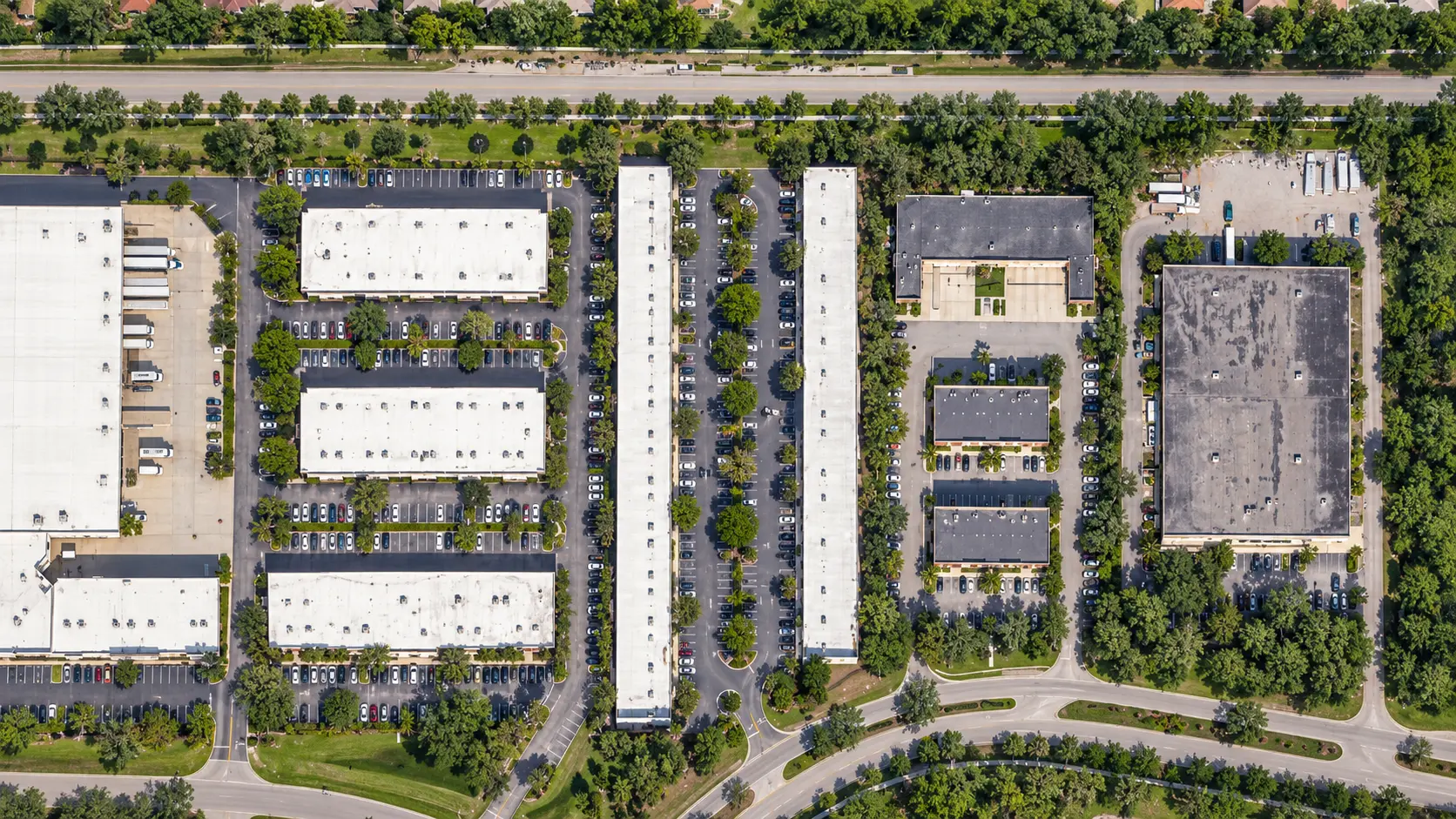
Treycor field studies document how autonomous security infrastructure performs in real operating environments — what it sees, what it captures, how it supports operators and where it creates measurable decision advantage.
Case Study 001 / Vista Parkway6-Month Validation
PERSISTENT OBSERVATION.
Testing evidence capture, coverage continuity and the ability to force-multiply an existing security operation without removing the human decision-maker.
Case Study 002 / Critical InfrastructureFuture Program
MISSION CONTINUITY.
Future validation focused on autonomous perimeter awareness, persistent sensing and operator decision support around critical sites.
Case Study 003 / Large-Scale PropertyFuture Program
WIDE-AREA AWARENESS.
Future validation focused on persistent patrol support, evidence continuity and security reach across large private properties.
Case Study 004 / Campus SecurityFuture Program
DISTRIBUTED COVERAGE.
Future validation focused on coordinating autonomous sensing across distributed facilities while keeping operators in control.
Field Dossier / 001
VISTA PARKWAY.
A six-month field validation program built to determine whether autonomous security infrastructure can deliver persistent awareness, stronger incident evidence and greater operational reach for an existing security team.
EnvironmentIndustrial / Commercial
MissionPersistent Security Coverage
DurationSix Months
StatusField Validation Program
Operational Thesis
The core gap is not simply crime. It is coverage continuity and evidence capture — seeing enough of the property, early enough, to give operators useful context when something matters.
Operational Gap
THE THREAT SURFACE IS TIME + SPACE.
Human patrols are finite. Fixed cameras are directional. The property keeps operating between both. The test is whether autonomy can reduce that blind interval without adding unnecessary burden to the security team.
01
Evidence Capture
Preserve visual context around operationally relevant events, not just a narrow snapshot after the fact.
02
Coverage Continuity
Reduce visibility gaps between patrols and across areas that cannot be observed simultaneously by one person.
03
Time-to-Context
Give operators useful situational information before deciding whether to investigate, redirect or escalate.
04
Operational Reach
Test whether the existing team can supervise more of the property without sacrificing judgment or control.
Field Perspective / Head of Autonomy
“Vista Parkway isn't a crime experiment. The operational gap is coverage. When something happens, the question is: did we see enough, early enough, and capture the evidence needed to act? The goal is to give the security team persistent eyes and better context — not replace the people making the decisions.”
Leandro AlvarezHead of Autonomy / Treycor Technologies
Vista ParkwayField Validation / Case Study 001
Mission Architecture
HUMAN AUTHORITY. AUTONOMOUS PERSISTENCE.
The objective is force multiplication: keep human security personnel responsible for judgment and response while autonomy extends observation, evidence capture and operational awareness.
Mission Objective / 01
BUILD A USABLE EVIDENCE CHAIN.
Test whether autonomous observation can capture useful visual context before, during and after an event rather than relying only on a fixed camera or nearby person.
Test QuestionCan Treycor improve the completeness and usefulness of incident evidence?
Mission Objective / 02
REDUCE THE BLIND INTERVAL.
Evaluate whether autonomous systems can maintain observation between patrols and across parts of the property that cannot be monitored simultaneously.
Test QuestionCan persistent autonomy materially increase useful coverage across the property?
Mission Objective / 03
GIVE OPERATORS DECISION ADVANTAGE.
Test whether the security team receives more relevant context before deciding where to move, what to investigate and whether to escalate.
Test QuestionDoes autonomy help the same team make faster, better-informed operational decisions?
Mission Objective / 04
PROVE VALUE UNDER REAL CONDITIONS.
Move beyond a controlled demonstration and test the system against repetitive, unpredictable day-to-day property activity over six months.
Test QuestionDoes the platform create enough operational value to justify permanent deployment?
THE PROPERTY BECOMES THE LAB.
Buildings, parking areas, access roads, changing traffic and normal daily operations create the conditions required to validate autonomous security outside a controlled test environment.
Human + Autonomy
SECURITY AS A FORCE MULTIPLIER.
Human security remains the decision-maker. Treycor is the persistent sensing and autonomy layer designed to extend how much of the property that team can understand and supervise.
Human LayerJudgment
Authority, context, escalation, communication and response.
+
Autonomy LayerPersistence
Observation, movement, evidence capture and continuous sensing.
=
Operational EffectMore Reach
A security team capable of seeing and understanding more of the property.
6-Month Test Program
FIELD TIME CREATES TRUTH.
Each phase moves from baseline understanding to sustained operations and finally to evidence-based validation.
Phase 01 / Baseline
UNDERSTAND THE PROPERTY BEFORE CHANGING IT.
Document normal activity, patrol patterns, existing camera coverage, operator workflows and visibility limitations before evaluating Treycor's contribution.
Phase 02 / Coverage
MAP WHERE AUTONOMY CAN ADD PERSISTENT EYES.
Identify areas and time windows where property geometry, patrol frequency or fixed camera placement creates gaps in useful observation.
Phase 03 / Operations
INTEGRATE THE SYSTEM INTO DAILY SECURITY WORK.
Test routine workflows, operator interaction, patrol support and escalation paths so autonomy becomes part of the operating model rather than a disconnected tool.
Phase 04 / Evidence
TEST WHAT THE SYSTEM ACTUALLY CAPTURES.
Review whether the platform produces useful incident context, reconstructable visual evidence and actionable information for the security team.
Phase 05 / Endurance
MEASURE RELIABILITY UNDER REPETITIVE FIELD USE.
Evaluate operating continuity, workflow friction and system behavior over time, then refine procedures based on recurring field conditions.
Phase 06 / Validation
COMPARE THE FIELD RESULT TO THE ORIGINAL BASELINE.
Determine whether the program materially improved awareness, evidence capture, operator decision support and the operational reach of the existing team.
Measures / Not Results
WHAT THE PROGRAM WILL MEASURE.
These are validation criteria, not performance claims. Quantitative findings should be published only after the field data exists.
01
Coverage Continuity
How consistently useful observation is maintained across relevant areas and time periods.
02
Evidence Completeness
Whether captured imagery provides enough context to understand and reconstruct operationally relevant events.
03
Time-to-Context
How quickly operators can understand what is happening before deciding whether to investigate or escalate.
04
Mission Availability
How reliably the autonomous layer remains available for normal field operations over the six-month period.
05
Operator Workload
Whether the system increases useful awareness without creating unnecessary monitoring or workflow burden.
06
Force Multiplication
Whether the existing security organization can supervise more of the property with stronger information and context.
Case Study 001
THE FIELD DECIDES.
Vista Parkway is designed to answer a practical question: can persistent autonomous security infrastructure give an existing security team better awareness, stronger evidence and greater operational reach in a real commercial environment?
Draft field-study language. Results and quantitative performance claims should be added only after the six-month program produces validated data.Field Validation / In Progress
PRIVACY CONTROL
Privacy, on your terms.
Essential technologies keep Treycor.com secure and operational. With your permission, additional technologies help us understand performance and improve your experience.